
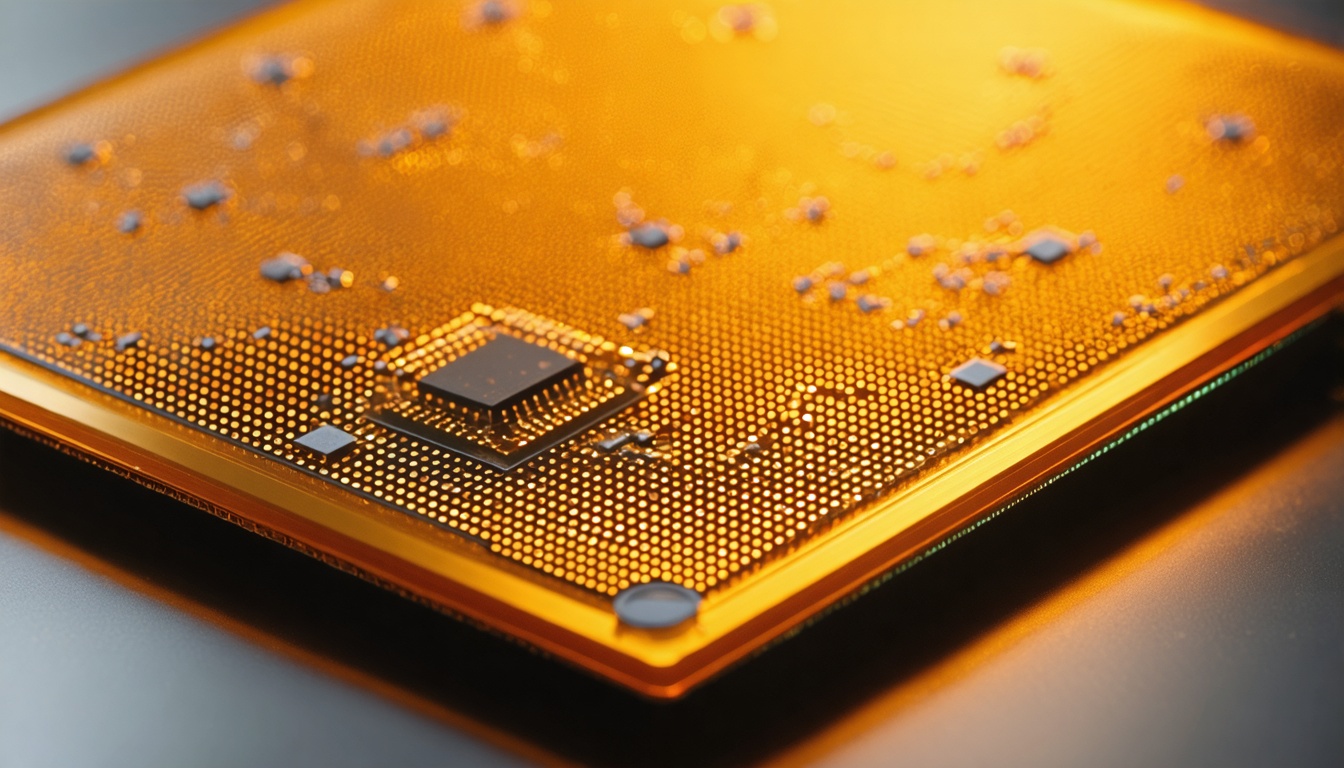
Yield loss costs the global semiconductor industry roughly $50 billion per year. That number comes from SEMI's 2024 industry survey, and it has not moved much in a decade — despite every major equipment vendor adding more sensors and every fab spending more on process control software. The gap between what the data contains and what engineering teams can actually extract from it is where yield loss hides. That is the problem we built SynthKernel to address, and today we are announcing our Seed Round to expand the work.
What the Funding Covers
The Seed Round will fund three priorities. First, we are accelerating deployment at additional fab sites — specifically targeting 200mm and 300mm fabs running logic and memory nodes below 28nm where defect complexity is highest relative to the inspection bandwidth available. Second, we are expanding defect classification coverage to compound semiconductor (GaN, SiC) and power device nodes, which have distinct defect morphologies that our current models were not trained on. Third, we are growing the integration engineering team to support faster SECS/GEM onboarding across a wider range of installed toolsets.
We are not announcing the specific investors or dollar amount at this time. That information will be disclosed in a future update once the round is fully closed. What we can say is that the investors involved have direct operating experience in semiconductor process equipment and fab automation — which matters more to us than the check size.
Why Yield Optimization Needs a Dedicated Tool
The standard answer to yield problems at most fabs is more data. Add another inspection step. Pull more SPC charts. Hire more yield engineers. That approach reaches its limits at nodes below 14nm, where the defect signatures are subtle, the process windows are narrow, and the volume of inspection data exceeds what any team can manually triage. KLA's Klarity and Synopsys Yield Explorer handle parts of this problem at the MES and data warehouse layer. What has been missing is an analysis layer that sits between raw inspection output and engineer decision-making — something that can classify defects, correlate across layers, and rank yield-impact candidates without requiring manual SQL queries or custom scripting.
SynthKernel is that layer. It reads directly from KLA, Lam, ASML, and Applied Materials inspection outputs via standard KLARF and SECS/GEM interfaces, applies trained classification models, and delivers ranked alerts with supporting evidence to the yield engineer — within 12 minutes of an inspection event under typical conditions. That latency matters because process decisions at 14nm and below are time-sensitive. A lot that advances to the next critical layer before an excursion is contained can represent six figures in wasted process cost.
The Compound Semiconductor Expansion
Adding GaN and SiC coverage reflects where the market is moving. Power electronics demand for electric vehicles and high-frequency RF applications is driving 6-inch and 8-inch SiC wafer production at a pace that is outrunning the available yield engineering expertise. The defect types that limit SiC yield — micropipes, carrot defects, stacking faults, and basal plane dislocations — require different classification models than the oxide and metal defects that dominate silicon logic yield work. We have been collecting labeled image datasets from two SiC partners over the past eight months and expect to have production-ready models for the most common SiC defect classes by Q2 2026.
GaN-on-silicon and GaN-on-SiC have a different set of challenges, primarily around threading dislocation density and surface pit formation during epitaxial growth. Those are inspection problems as much as process problems, and the model architecture we use for silicon defect classification transfers reasonably well with retraining. We expect GaN model coverage to follow SiC by approximately two quarters.
Deployment Model and Data Privacy
Nothing about our deployment model changes with this round. SynthKernel runs entirely on-premise. No wafer images, die maps, defect coordinates, or process parameters leave the customer's facility network. All model inference happens on hardware we provision inside the fab's data center or secure server room. Audit logs for every inference event are written to the customer's own logging infrastructure.
This is not a marketing position. It reflects the actual requirements of the fabs we work with, all of which treat process data as a core intellectual property asset. A cloud-based yield analytics service that requires uploading inspection images is a non-starter for any fab running proprietary process flows. We designed on-premise deployment as the default from day one, and that design choice has been the primary reason we have been able to close deals with customers who had previously declined to evaluate cloud-based alternatives.
What Comes Next
The integration engineering expansion is the operational piece most immediately visible to existing and prospective customers. Onboarding currently takes two to four weeks depending on the complexity of the installed toolset and the state of the customer's SECS/GEM configuration. We expect to bring that down to under two weeks as standard practice by mid-2026, and under one week for fabs using KLA Surfscan and Defect Review SEM toolsets that we have already built direct connectors for.
Model retraining on customer data is another area we are investing in. The classification accuracy numbers we report — 97.3% on CDSEM review images across 14nm and below — reflect performance on a held-out test set drawn from our training corpus. Customer-specific defect types and process conditions will differ. We now have the infrastructure to run supervised fine-tuning on customer-labeled data within the customer's facility, without that data leaving their network. That capability moves us from a good out-of-the-box classifier to a tool that improves the longer it runs in a specific fab environment.
A Note from the Founder
I spent seven years at a 300mm logic fab before starting SynthKernel. The yield engineering workflow I experienced involved a lot of very skilled people spending most of their time on data retrieval and correlation tasks that a well-designed software system should handle automatically. The actual engineering judgment — deciding what to change and why — was maybe 20% of the work. The other 80% was pulling data, cleaning it, and building spreadsheet models to correlate things that should have been correlated automatically. SynthKernel exists to flip that ratio. The Seed Round gives us the resources to do that at the scale the problem requires.
If you are running a fab that is losing yield to defects you cannot classify quickly enough, or to excursions you cannot contain before they advance three layers, contact us at [email protected]. We are actively scheduling integration pilots for Q1 2026.